Sunday, 7 July 2013

Coral gardens

"Just sit right back and you'll hear a tale - a tale of a fabulous trip - that started from a tropic port with a two-hour trip - a two hour trip."

With midwinter's shorter days and cooler temperatures and quiet times on the garden front at home here in Brisbane, the opportunity to join the family on a trip north was too good to pass up.

Last Saturday, I headed to the airport for a one hour flight to Gladstone - this story's 'tropic port' -  a regional city about 500 km north of Brisbane. From there a connecting bus whisked me directly to the marina where I met up with my brother Tony's family, and we boarded the boat for the two hour cruise to Heron Island, a coral cay about 90 km from the mainland at the southern end of the Great Barrier Reef.

Looking back at the mainland as we leave Gladstone harbour.


One of the little islands just off the mainland.


A humpback whale migrating to warmer waters.


Our destination, Heron Island.


Arriving at the jetty.


First glimpse of the beach adjoining the jetty.

There were friendly locals waiting to greet the new arrivals. This was the view from the jetty - luckily human-'friendly' black and white tip reef sharks and lemon sharks.

Swim little fishies, swim!


Heron Island was first settled by Europeans with the opening of a turtle canning factory in the 1920's. Fortunately for these beautiful creatures, it quickly became unviable as a business due to the fluctuating turtle population. The island has been a tourist resort since the 1930s. In 1943 it was declared a national park, and eight years later the University of Queensland's (my alma mater) research centre was established.

Today the resort accommodates about 200 guests and 100 staff, and the research centre is one of the world's foremost specialising in the ecology of the coral reef.


The island's namesake herons - now reclassified as the Eastern Reef Egret.


Happily installed in our beachfront apartments


A pair of egrets - the different colours are still the same species.


Views of the beach in front of our apartments at high tide.


A little further along North Beach.


Dusk - Day One


Just offshore this group of about four sharks were carving through a school of fish.

The same beach looked quite different at low tide the next day when we joined a reef walk with one of the marine biology students as our guide.


Sea cucumbers were all over the reef. This black one is alongside a clump of turtle weed once believed to have been a staple of the sea turtles' diet.


The blue zigzag towards the centre of the picture is the mantle of a giant clam. They come in a great variety of colours, and each mantle is as unique as a fingerprint.


Another clam


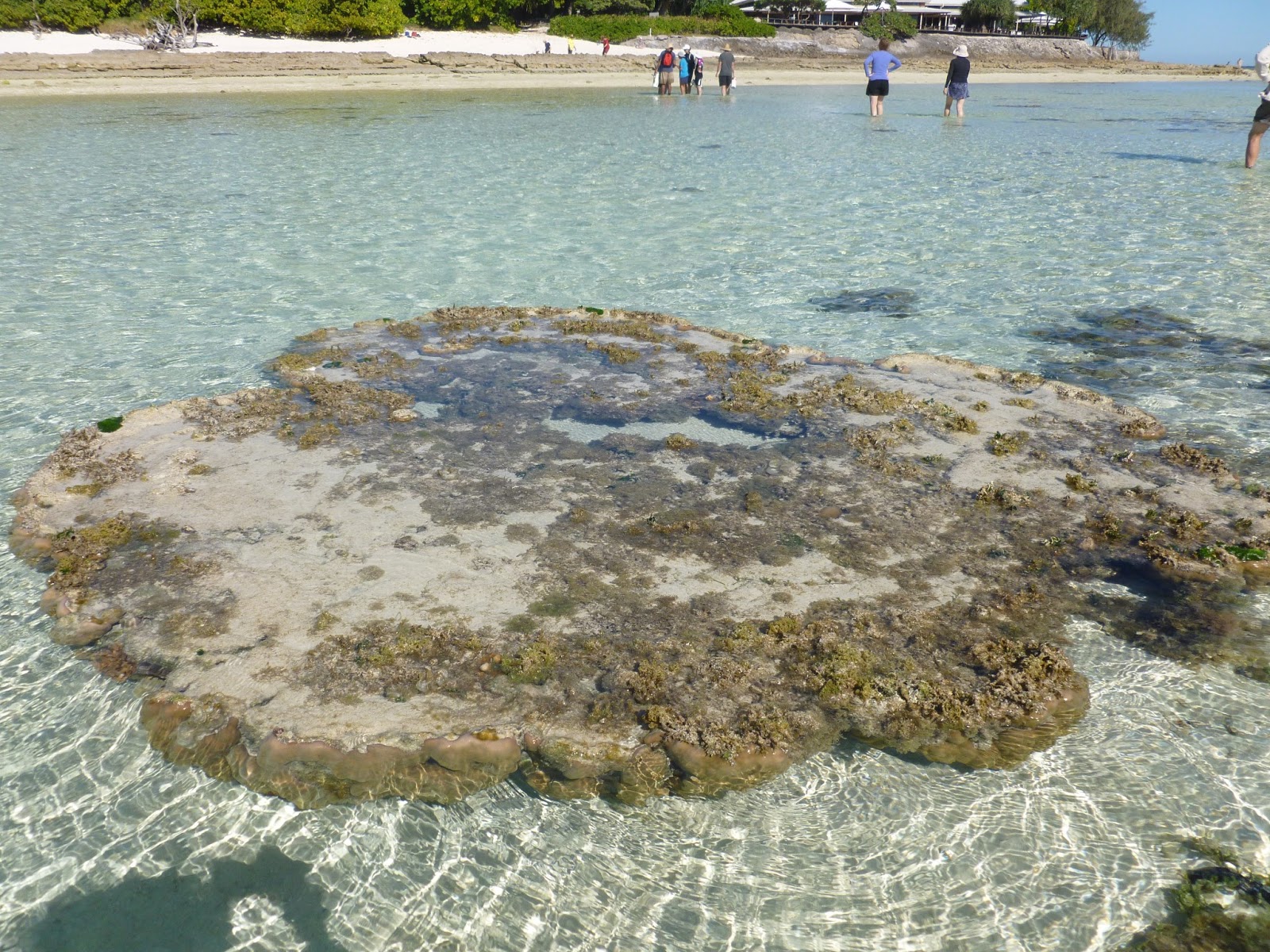
This mauve and the brown coral below are referred to as day corals, because the coral polyps are active in the daytime, unlike most which are nocturnal.


This reminds me of cornelli embroidery.


Looking back to the main administration building, bar and jetty (far right).


The mauve tips on this coral remind me of asparagus.


Clam with black mantle.


Beautiful turquoise-coloured mantle


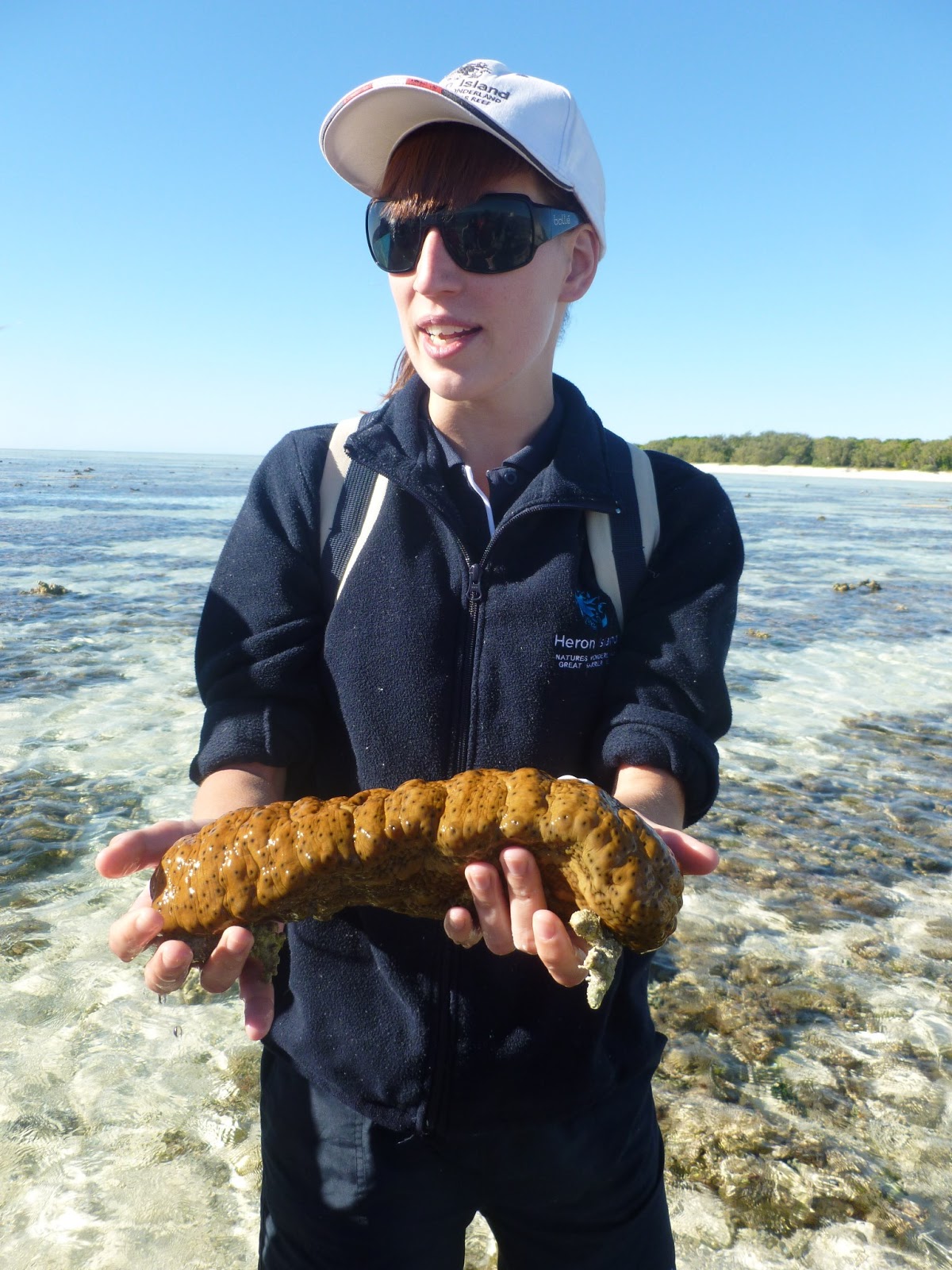
Hannah, our guide, with a sea cucumber - a relation of sea urchins and starfish.


Starfish and turtle weed


My niece Yasmin and the starfish


Another variety of sea cucumber to the top of this clam. I think this was called a Feathermouth (or feathertop?).


The gantry once used to unload passengers and cargo.

Hope you enjoyed this look at my first few days on Heron Island. Up to this point, the photos are from my faithful Lumix DMC-FH25 'point and shoot', but I finally lashed out and bought a new digital SLR. In my next post I'll show you my first experiments with it as I focus my attention (pun intended) on the island's birdlife.


Saturday, 15 June 2013

Garden Bloggers' Bloom Day June 2013

It's hard to believe that it is more than a month since my last post and that I missed May Garden Bloggers Bloom Day completely. However, I am slowly making inroads trying to get the house in order and catch up with study for a short course I have enrolled in.

The garden has been neglected, but being wintertime here in Brisbane, I can almost get away with it. Unusually for this time of year, we have had a little rain. Although the shortest day of the year is only just around the corner and the temperature is dipping to around 20C by day and under 10C in the evening, there is still plenty of colour to be seen in my winter garden.

'Wilders White' Hibiscus

In the front garden, most of the colour comes courtesy of the aloes, several members of the sage and salvia family, and the deep red foliage of the Cordyline Rubra.


Looking across the front garden to the aloe and Hawaiian Fan Palm, the striped foliage in the foreground is a rhoeo.


Aloe 'Diana'


Afternoon light throught the cordylines.


Yucca 'Purple Royale' to the right of this Diana spike

Aloe 'Southern Cross' and grapetopetalum

On the driveway, the Strelitzia or Bird of Paradise are in bloom (and  Bella and Onslow are keeping up patrol duties)


Nandina

Interestingly, in the side garden my Brazilian Red Cloak is still putting on a great display, although it was back in March that I was admiring them in the City Botanic Garden. I like it with the dark foliage of the cordylines in the background, and I am leaving a similarly coloured euphorbia volunteer to the left of the red cloak for the same reason.


Brazilian Red Cloak Megaskepasma erythrochlamys

Three of the salvias are adding a pop of colour to the garden bed.

'Heatwave Sizzle'

Pineapple sage


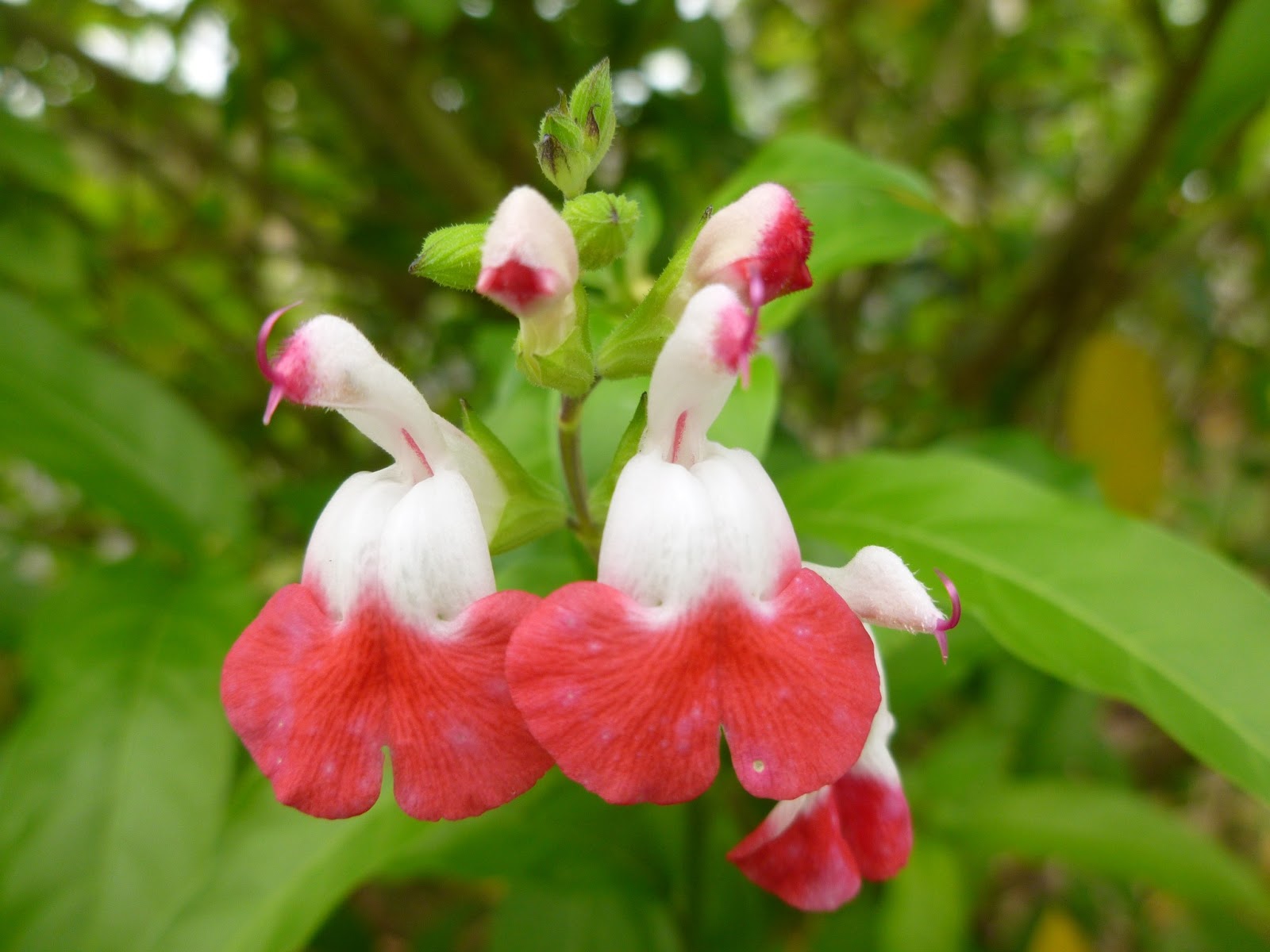
'Hot Lips'

Two of the bromeliads are in flower. The top one is Aechmea 'Burning Bush'. I don't know the name of the other, but the bright purple and red combination make it one of my favourites.


All in all, the garden has held up quite well in spite of having been somewhat neglected while I've been busy.  Like Onslow I have been on the inside looking out, rather than out there getting my hands dirty. Hopefully, I will be able to turn that around by the time of my next garden report.


To see what is happening in other gardens around the world this Bloom Day, visit Garden Bloggers Bloom Day host Carol at May Dreams Gardens.

LinkWithin

Related Posts Plugin for WordPress, Blogger...